FINLAND’S DEFENCE COMMAND WARNED ABOUT INCREASED RISK OF UNDERSEA INFRASTRUCTURE SABOTAGE, AND IN THE USA, FROZEN TEMPERATURES AND RESTRICTED GAS SUPPLIES CAUSED POWER OUTAGES
January 22-28, 2026 | Issue 4 - Emergency Management, Health, and Hazards (EMH2) Team
Lavinia Ansalone, Giovanni Lamberti, Cora Jordan, Ludovica Leccese, Halleli Alpert
Elizabeth Fignar, Editor; Elena Alice Rossetti, Senior Editor

Maritime Surveillance[1]
Date: January 22, 2026
Location: Baltic Sea
Parties involved: NATO; NATO military commands; NATO members; NATO members’ national authorities; Finland’s Defence Command; private cable operators; Russia
The event: Finland’s Defence Command alerted to the increased risk of undersea infrastructure sabotage from Russia.[2]
Analysis & Implications:
NATO will very likely accelerate and operationalize shared resilience measures following Finland’s Defence Command alert, likely signaling a shift from long-term planning toward immediate protective actions. NATO will very likely expand coordinated maritime patrol and seabed security operations by reallocating naval surveillance assets, integrating unmanned surface and underwater systems, and conducting intelligence, surveillance, and reconnaissance (ISR) activities to map baselines. NATO will very likely foster closer cooperation between NATO military commands, NATO members’ national authorities, and private cable operators, very likely increasing the number of cable repair vessels and submersibles to ensure continuous maintenance and timely, effective restorations. NATO members will very likely enhance shared monitoring frameworks by upgrading remote surveillance and threat-detection systems capable of identifying anomalous maritime activity near undersea cables, very likely strengthening early warning and response coordination.
Russia will very likely continue to leverage plausibly deniable grey-zone interference against undersea infrastructure as a sustained coercive tactic. This approach will likely remain viable because limited end-to-end monitoring and deep water forensic constraints will likely complicate rapid, high-confidence attribution following infrastructure disruptions. As this deniability-driven attribution uncertainty persists, Russia will likely continue to exploit NATO’s difficulty in defining clear response thresholds by implementing information operations and selective diplomatic signaling, very likely steering alliance reactions on surveillance and information sharing rather than punitive gestures. With no strong response, Russia will likely incrementally expand deniable pressure activities such as sabotage, espionage, and other covert actions to test the alliance’s collective resolve while minimizing the risk of retaliation.
Date: January 26, 2026
Location: USA
Parties involved: US; malicious actors; threat actors; cyber threat actors
The event: Frozen temperatures and gas supply restrictions led to power outages across the Eastern USA.[3]
Analysis & Implications:
Malicious actors will very likely exploit the extraordinary situation caused by power outages to gather information on operational patterns, unlikely planning an immediate cyberattack. Power outages will very likely generate inconsistencies and anomalies in operational data, such as energy management, likely offering malicious actors security gaps about the resilience of energy infrastructure. Within energy optimization, threat actors will likely aim to leverage the temporary halt of maintenance controls during the accelerated restoration of power, which very likely makes infrastructure more vulnerable to attacks. Cyber threat actors will very likely gather information to consolidate network intelligence and store internal systems’ information, likely to use it when alerts and vigilance reduce in the coming weeks.
US grid stability during winter storms will likely depend on resource distribution disruptions, such as frozen pipelines hindering transportation, rather than resource scarcity that inhibits fuel availability. Expanding on-site fuel storage will likely allow power plants to continue operations during delayed fuel deliveries by reducing the immediate dependence on transportation networks and circumventing fixed pipeline capacity. Lack of access to alternative supply routes will likely prevent power plants from rerouting fuel, likely reducing their operational flexibility and deepening susceptibility to power outages. Operational continuity during winter storms will likely stem from strategic logistical resilience protocols that mitigate reliance on single delivery pathways and preserve fuel access when primary transportation fails.
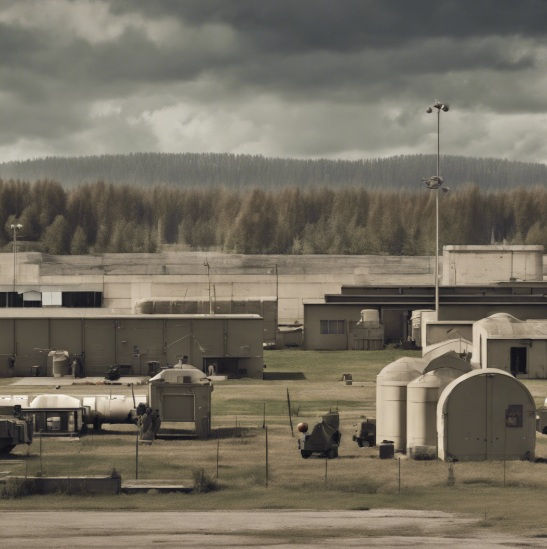
[1] Supporting Mission, by Sgt. Amelia Kang licensed, under Public Domain (The appearance of U.S. Department of Defense (DoD)/Department of War (DoW) visual information does not imply or constitute DoD/DoW endorsement.)
[2] Russia likely to keep trying to damage Baltic Sea infrastructure, Finland says, Reuters, January 2026, https://www.reuters.com/business/aerospace-defense/russia-likely-keep-trying-damage-baltic-sea-infrastructure-finland-says-2026-01-22/
[3] Power plant outages surge in Eastern US amid restricted gas supplies and frigid weather, Reuters, January 2026, https://www.reuters.com/business/energy/power-prices-surge-winter-storm-spikes-demand-us-data-center-alley-2026-01-25/