THREAT CLIMATE ASSESSMENT: EUROPEAN FRAGMENTATION OVER AIRSPACE AND BASE ACCESS LIKELY TO IMPACT US MILITARY LOGISTIC CAPABILITIES
Chiara Michieli, Nicola Bonsegna, Jaydn Burgin, Fleur Van Gorp, Leon Kille EUROPE Team
Alexia Andrica, Editor; Jennifer Radlinsky, Senior Editor; Jennifer Loy, Chief Editor
April 5, 2026

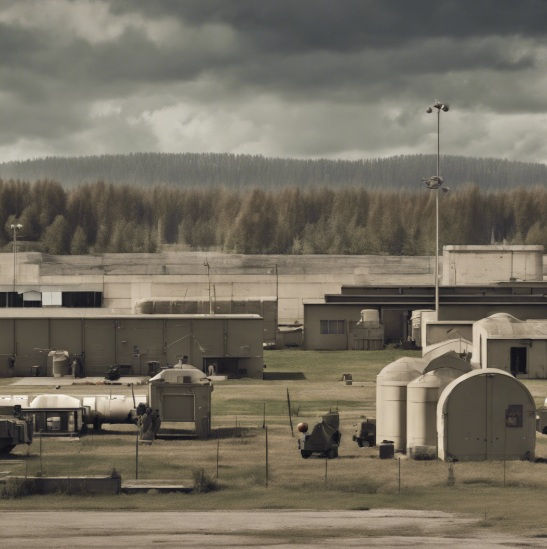
US Military Transport Aircraft Overflying Continental Europe[1]
BLUF
Austria[2] and Switzerland[3] have restricted the overflight and base access of US military aircraft involved in the war in the Middle East, as did NATO members Italy, Spain, and France.[4] Restrictions on US access come as the US-Israeli military engagement against Iran is met with increasing scrutiny and perceived as being at odds with European countries’ national interests.[5] European states will very likely increasingly follow domestic political considerations when granting airspace access to US forces, likely resulting in an unreliable US access to military logistical infrastructure. The US’s compliance with international law and neutrality policies will very likely lead to the enforcement of stricter legal requirements for granting airspace access to US aircraft, likely limiting the US European Command (USEUCOM) forces' rapid reaction and deployment. Consistent refusal to grant overflight rights and base access will very likely negatively impact transatlantic relations, likely jeopardizing US-European military cooperation. Multiple restrictions on US forces' access to European airspace and bases will likely fragment transatlantic relations while increasing USEUCOM logistical complexity and transatlantic cooperation dynamics, with a roughly even chance of impacting US operations in the Middle East.
Introduction
On April 2, 2026, Austria announced a ban on US military aircraft involved in the war in Iran from entering its airspace,[6] citing its permanent neutrality doctrine.[7] The Austrian Ministry of Defense further disclosed that it had rejected all previous requests made by the US in relation to the Iran war.[8] Austrian Vice Chancellor Andi Babler declared via social media that Austria “wants nothing to do with Trump’s policy of chaos and his war, which will bring us the next energy crisis” and issued the statement “no to war.”[9] Europe is of major strategic importance to the US in its military campaign against Iran.[10] The US operates a vast network of military installations throughout central and western Europe, including multiple airbases.[11] These function as transport hubs for flights heading into the Middle East, requiring passage through sovereign European airspace.[12] Increasingly fragmented overflight considerations for US military aircraft restrictions could therefore complicate future US operational planning.
As part of the current strive for European strategic autonomy,[13] individual member states are becoming increasingly selective, requiring conditional case-by-case authorization for US military access, with countries simultaneously restricting overflight and base use when requested for offensive military flights connected to the Iran campaign.[14] The restrictions on US air operability are expanding from neutral states, like Austria, to NATO member states that have historically provided overflight and base access for US-led operations, particularly during conflicts like Iraq in 2003 and Libya in 2011.[15] Other major EU countries that have presently also refused overflight permission to US military aircraft include NATO members Spain[16] and Italy.[17]
Analysis
Political
European decision-making will likely shift from generally aligned support for US-led military operations to more conditional responses shaped by domestic political considerations and national interests. European countries generally demonstrated political alignment with US-led military operations by supporting overflight and base access when alliance cohesion and shared strategic interests are prioritized. European governments will increasingly likely restrict or condition US military overflight and base access based on domestic political considerations, as demonstrated by public denials or limitations of support for US-led operations, including recent restrictions during the Iran conflict. The shift will likely reduce the reliability of European political support for US military operations. As a result, US forces will likely face less predictable access to bases, overflight, and operational support that will likely constrain operational planning and limit flexibility.
Legal
Transatlantic military logistic cooperation will likely move from the flexible application of legal frameworks supporting US-led operations to stricter enforcement of legal constraints, including neutrality and international legal obligations. European countries generally applied legal frameworks, including neutrality policies and international law, with a degree of flexibility that enables support for US-led operations when aligned with broader alliance objectives. European governments are increasingly enforcing legal frameworks more strictly, which will likely restrict US military overflight and base access through denials and formal authorization requirements. This shift will likely constrain US military operations by embedding stricter legal requirements, resulting in delays or denials in securing overflight and base access that will likely limit rapid deployment and operational responsiveness, requiring USEUCOM to plan for longer approval timelines.
Geopolitical
European states will likely transition from granting airspace and base access grounded in alliance solidarity to conditional, case-by-case decisions driven by national strategic interests and a broader push for European strategic autonomy. European states have generally granted overflight and logistical cooperation to US-led operations when their strategic interests converged, consistent with the perception of the US as Europe’s main military security provider. European states are now likely to condition US military access on national strategic interests rather than alliance solidarity, as demonstrated by recent access restrictions by France, Italy, and Spain. US power projection and military operations will likely become increasingly contingent on alignment with European priorities, with a roughly even chance that this shift will persist beyond the current conflict, progressively reducing the predictability of allied support and complicating US operational planning.
European restrictions on US military operations are likely shifting from historically isolated, context-specific national decisions to an emerging pattern of simultaneous restrictions, likely signaling a fragmentation of alliance cohesion with the US. European restrictions on US military operations were historically isolated, with individual states basing their refusal to cooperate on specific domestic factors, almost never resulting in a simultaneous multi-state denial within a single conflict timeframe. Multiple European countries are now independently restricting US military access during the same conflict, likely driven by shared political and legal constraints, such as the unilateral nature of US-Israeli operations and the condemnation by UN bodies. There is a roughly even chance that the number of European states restricting US military access will increase, likely deepening the fragmentation of allied unity and complicating US military planning in the European theater.
Recommendations
The Counterterrorism Group (CTG) recommends that the US and its European military alliance review their bilateral military cooperation agreements, including technical cooperation and overflight authorizations, in light of the current US-Israeli military efforts in the Middle East.
The US should establish regular bilateral meetings with European governments to coordinate military access and overflight decisions.
USEUCOM should factor in longer approval times for overflying European countries and accordingly engage in proactive, timely communication to minimize logistical disruptions and ensure operational effectiveness.
The US should engage in confidence-building measures with European allies reluctant to grant airspace and base access due to concerns about international law violations by providing evidence that designated targets are lawful.
The US aviation should consider rerouting military cargo supplying US bases in the Middle East through North Africa and the Red Sea.
The US should establish tailored bilateral military cooperation agreements with those European states that rely heavily on US security guarantees and are consistently aligned with US strategic objectives.
Threat Climate Assessment
Analysis indicates there is a HIGH PROBABILITY that the threat climate shifts from generally aligned European support for US-led military operations to increasingly fragmented, nationally driven decision-making. This will VERY LIKELY complicate logistical support for US military efforts in the Middle East in the short term and LIKELY reduce the reliability of European support for US military access and operations. As the US offensive continues, the environment will LIKELY deepen fragmentation of alliance cohesion. Fragmented and inconsistent cooperation by the US’s historical European allies will VERY LIKELY jeopardize transatlantic relations in the long term and increase operational risks for USEUCOM, as multiple European countries will LIKELY consistently refuse to allow access to their airspace and bases.
[1] Hussar Saber: Airmen heighten rapid response with Allies, by Master Sgt. Scott Thompson, licensed under Public Domain (The appearance of US Department of Defense (DoD)/Department of War (DoW) visual information does not imply or constitute DoD/DoW endorsement.)
[2] Austria denies US use of airspace for Iran military operations, Reuters, April 2026 https://www.reuters.com/world/middle-east/austria-denied-us-access-its-airspace-gulf-military-operations-reports-newspaper-2026-04-02/
[3] Neutral Switzerland denies airspace for US military flights to Iran, Swissinfo, April 2026 https://www.swissinfo.ch/eng/neutrality/several-us-overflight-requests-rejected-by-the-federal-government/91192596
[4] Donald Trump denounces European states restricting US access to airspace due to Iran war, The Irish Times, April 2026 https://www.irishtimes.com/world/middle-east/2026/04/01/donald-trump-denounces-european-states-restricting-us-access-to-airspace-due-to-iran-war/
[5] As Iran war rages, Europe gears up for energy crisis, DW, April 2026 https://www.dw.com/en/as-iran-war-rages-europe-gears-up-for-energy-crisis/a-76641027
[6] ‘No to war’: Austria blocks US warplanes from its airspace, Politico, April 2026 https://www.politico.eu/article/austria-blocks-us-warplane-overflights-citing-neutrality/
[7] Constitutional Law on the Neutrality of Austria, ICL Project, https://www.verfassungsvergleich.de/au06000_.html
[8] Ibid.
[9] No to war’: Austria blocks US warplanes from its airspace, Politico, April 2026 https://www.politico.eu/article/austria-blocks-us-warplane-overflights-citing-neutrality/
[10] Where Are US Forces Deployed in Europe?, Council on Foreign Relations, February 2025,
[11] Ibid.
[12] Europe hardens opposition to Trump’s Iran war demands, Politico, March 2026,
[13] Strategic autonomy and European Competitiveness: Security now comes first, European Parliament, December 2025,
[14] Spain closes airspace to US planes involved in Iran war, defence minister says, Reuters, March 2026 https://www.reuters.com/business/aerospace-defense/spain-closes-airspace-us-planes-involved-iran-war-el-pais-says-2026-03-30/
[15] Spain closes airspace to US planes involved in Iran war, PBS, March 2026,
[16] Spain closes airspace to US planes involved in Iran war, defence minister says, Reuters, March 2026 https://www.reuters.com/business/aerospace-defense/spain-closes-airspace-us-planes-involved-iran-war-el-pais-says-2026-03-30/
[17] Italy refuses US aircraft use of Sicily base for Middle East operations, sources say, Reuters, March 2026 https://www.reuters.com/business/aerospace-defense/italy-refuses-us-aircraft-use-sicily-base-middle-east-operations-source-says-2026-03-31/mobilizing