THREAT CLIMATE ASSESSMENT: JAMA’AT NUSRAT AL-ISLAM WAL-MUSLIMIN AND THE ISLAMIC STATE SAHEL PROVINCE TARGET LOCAL SAHEL MINING COMMUNITIES AND GOLD MINES, LIKELY FUNDING ONGOING EXPANSION EFFORTS
Amelia Bell, Cora Jordan, Giovanni Lamberti, Mackenzie LaCombe, Sophie Rieckmann, Ana Mertz, Katherine Sanchez, Eduardo Velázquez Jurado
Giovanni Lamberti, Editor; Jennifer Loy, Chief Editor
September 30, 2026
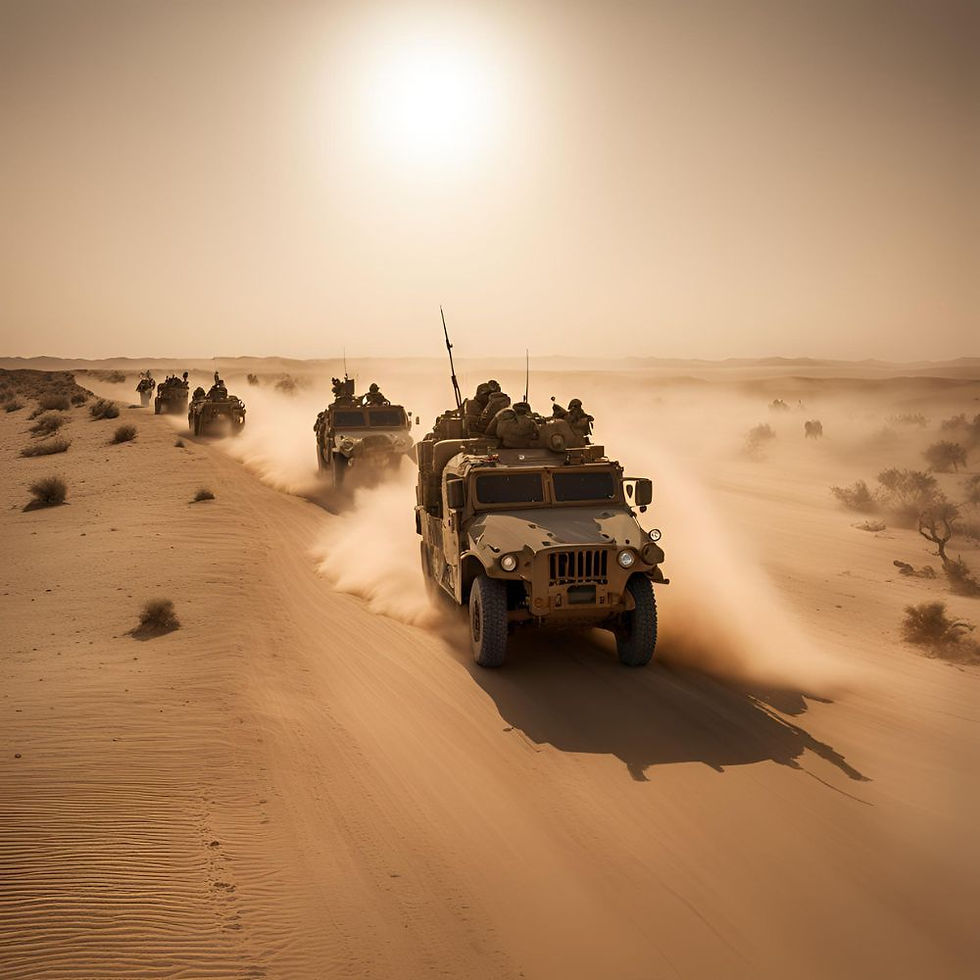
African Insurgency[1]
BLUF
Jama’at Nusrat al-Islam wal-Muslimin (JNIM) and the Islamic State Sahel Province (ISSP) activities have escalated from localized extortion and attacks targeting individual gold mines in Burkina Faso to sustained control over mining communities, revenue streams, and their supply chains across the Sahel.[2] They initially contested mining areas through attacks on state forces and local self-defense groups.[3] JNIM and ISSP will likely escalate their efforts to increase their control over mining areas in Burkina Faso, Mali, and Niger. Limited state security responses and presence outside Burkina Faso's capital will likely allow JNIM and ISSP to shift from contesting control over mines to regional economic leadership. Expanded control of the mines will likely provide JNIM and ISSP with a short-term revenue stream through extortion and illicit cross-border gold trade to fund weapons purchases. JNIM and ISSP’s growing control of mining areas will very likely enhance their ability to challenge state authority in Burkina Faso, Mali, and Niger. This will very likely continue to erode state legitimacy within mining regions across the Sahel, likely weakening the government’s ability to maintain control over these areas.
Introduction
The presence of JNIM and ISSP around gold mining sites in the Sahel has transformed regional dynamics.[4] Ongoing engagement with miners, traders, and transport networks has shown how these terrorist groups can sustain their presence and expand across mining communities.[5] These income sources allow militant groups to continue to plan and execute their attacks, as gold revenue is used to purchase equipment for further military operations such as weapons, ammunition, fuel, vehicles, and motorbikes.[6] From January 2015 to June 2026, 75% of violent incidents occurred in Burkina Faso, followed by Mali (15%) and Niger (10%), demonstrating the geographic concentration of mining-related incidents in Burkina Faso.[7] Burkina Faso has been at the center of mining-related violence, with its Inata gold mine, located near the Malian border, becoming the first militant target in 2018.[8] During this same period, JNIM was involved in 42% of mining-related conflicts compared to 27% for ISSP, indicating that JNIM has greater involvement in mining-related activity.[9] Across the Sahel, border regions have become critical sources of revenue for militant groups, showing potential regional expansion outside of Burkina Faso, Mali, and Niger.[10] The increased presence of militant groups combined with the reduced presence of governmental authorities reinforces these groups’ role as a governing authority figure in mining areas in the state’s absence.[11]
Analysis
Political
JNIM's political competition in gold-mining areas will very likely shift from competition with local actors to increased competition with state authorities. JNIM’s political competition in Sahel gold mining began in rural areas of Burkina Faso, where the group pushed out hired security actors from privately owned artisanal mines, opening the sites to nearby communities for a tax. JNIM’s political competition in Sahel gold mining targets state-owned sites in Burkina Faso and Mali, as the group contests larger industrial sites that both governments are taking direct ownership of. Over the next 30-90 days, JNIM’s increasing contestation of state authority over industrial mining sites will likely weaken the governments’ ability to exercise consistent authority over those mining areas. This is likely to undermine day-to-day state control at the government-owned sites, likely creating a durable space for JNIM to function.
JNIM’s presence at the Inata mine will very likely evolve from direct attacks on the mine, personnel, and convoys to assuming de facto authority over the mine and surrounding areas. Between 2017 and 2021, JNIM directly attacked the Inata gold mine and its associated gendarmerie post, and also targeted mine personnel and convoys serving the area. The absence of state security presence around the Inata gold mine will likely allow JNIM to be the de facto authority over the mine and its surrounding area. The Burkina Faso government’s inability to provide sufficient and adequate security around the Inata gold mine will very likely enable JNIM to continue to exploit security vulnerabilities and create a more sustained territorial presence. JNIM will likely exploit this opening to deepen its control and its freedom of movement around the Inata mine, with the next 30-90 days providing JNIM the time to consolidate its influence over the mine and its surrounding areas rather than directly contest the government's forces.
Military
JNIM and ISSP will very likely move from contesting mining areas through direct clashes with state or militia forces towards increased control over those areas. JNIM and ISSP presence at mining areas was contested mainly through confrontation with military forces and local self-defense groups. Burkina Faso’s Inata mine was attacked in 2018 and prompted the first intervention of French forces in the region. The 2019 attack on the Boungou gold mine in Burkina Faso exposed security weaknesses in industrial mining operations and led to the creation of the Volunteers for the Defense of the Homeland (VDP), a self-defense group, in January 2020. JNIM and ISSP will very likely seek to control gold-mining areas in Burkina Faso, Mali, and Niger where state authority is weak or absent. These governments are struggling to secure mining areas against JNIM and ISSP. The Inata mine in Burkina Faso closed in 2024 and is now controlled by JNIM. In the short to medium term, JNIM and ISSP will very likely exploit gaps in security coverage and limited military presence in mining areas, allowing the terrorist groups to control these resources. This is very likely to give them secure stepping stones for continued activity from those mining areas, likely complicating the government’s efforts to disrupt this activity given the limited willingness of armed forces to deploy into contested rural zones.
Threat Climate Assessment
Analysis indicates a HIGH PROBABILITY that the threat climate of Sahel gold mining will shift from episodic contestation of mining areas by JNIM and ISSP through direct attacks and clashes to sustained control, increasing competition with state authorities. Over the next 30-90 days, JNIM’s contestation of state authority over industrial sites in Burkina Faso and Mali will LIKELY weaken governments’ ability to exercise consistent authority over those mining areas, LIKELY undermining day-to-day state control at the government-owned sites. Where state security remains weak or absent, such as around the Inata mine, JNIM will LIKELY consolidate de facto authority over the mine and its surroundings rather than directly contest government forces. JNIM and ISSP are VERY LIKELY to exploit these gaps by using mining areas with limited military presence across Burkina Faso, Mali, and Niger to sustain continued activity over the short term. This is LIKELY to increase their capacity to persistently challenge state authority over time.
[1] Saharian Operations, generated by a third party image database (created by AI)
[2] Sahel Gold Mines Fuel Terror Groups, Africa Defense Forum, September 2026
[3]Extraction under fire: How mining reshapes conflict in the central Sahel, ACLED, July 2026https://acleddata.com/report/extraction-under-fire-how-mining-reshapes-conflict-central-sahel
[4] Sahel Gold Mines Fuel Terror Groups, Eurasia Review, September 2026
[5] Ibid
[6] Gold, Guns, and Cattle: JNIM’s $100 million War Economy in the Sahel, Insight Threat Intelligence, September 2025
[7] Extraction under fire: How mining reshapes conflict in the central Sahel, ACLED, July 2026
[8] Gold, Guns, and Cattle: JNIM’s $100 million War Economy in the Sahel, Insight Threat Intelligence, September 2025
[9] Extraction under fire: How mining reshapes conflict in the central Sahel, ACLED, July 2026
[10] Sahel Gold Mines Fuel Terror Groups, Eurasia Review, September 2026
[11] Assessing the nexus between terrorism and criminal activities in Africa, UNICRI, April 2026


